Last Updated: October 23, 2026
Quick Summary
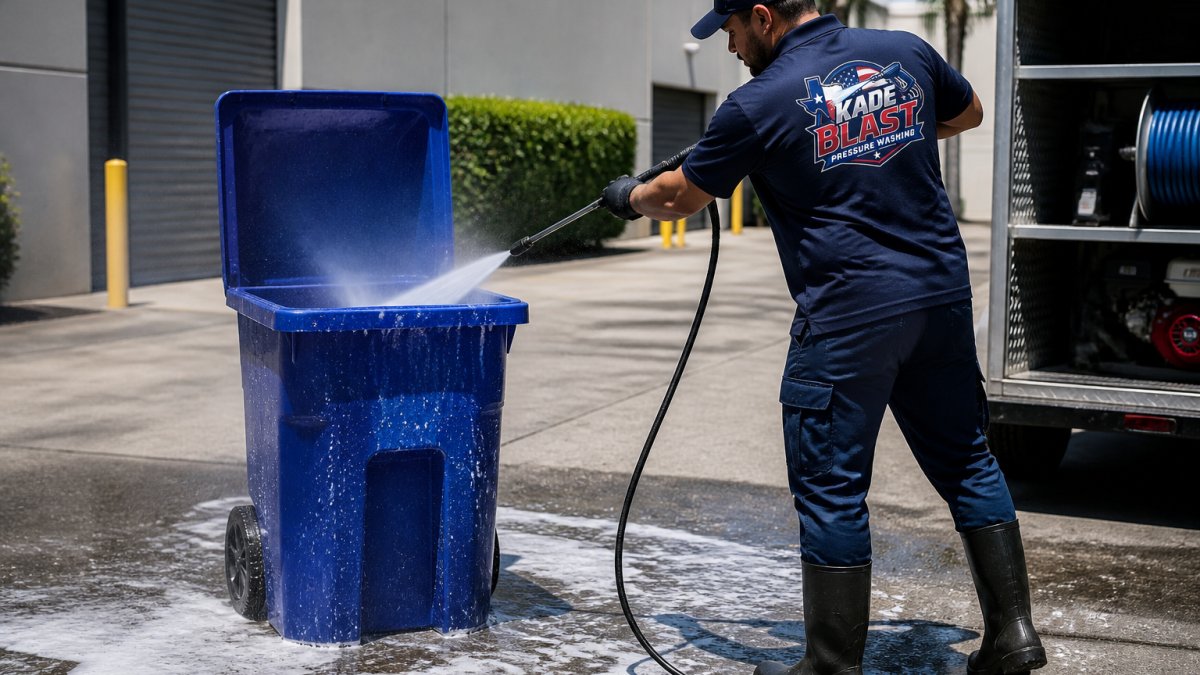
Professional bin cleaning does not sterilize your trash can, but it removes the conditions bacteria need to survive. The process combines heated water, high pressure, and a sanitizing solution to flush out organic waste, grime, and the film where germs multiply. Cleaning removes the food source, and sanitizing reduces what's left on the surface.
- Heat, pressure, and contact time are the three variables that decide how well bin cleaning works.
- Cleaning removes dirt first because sanitizer cannot reach germs buried under sludge.
- A kills 99% of bacteria claim only covers tested organisms under lab conditions.
- Clean bins monthly in summer, every six to eight weeks in spring and fall.
- Never wash bin runoff into a storm drain; dump it on grass or gravel.
Table of Contents
- What Professional Bin Cleaning Actually Does to Bacteria
- The Professional Trash Bin Cleaning Process, Step by Step
- Cleaning vs. Sanitizing Trash Cans: What the Difference Means for Germs
- What 'Kills 99% of Bacteria' Really Means (and How to Check It)
- Odor, Pests, and Stuck-On Grime: What Cleaning Removes and What It Can't
- How Often to Clean Garbage Bins in Hot Climates
- The Best Cleaner for Trash Cans (and a Safe DIY Method)
- Frequently Asked Questions
What Professional Bin Cleaning Actually Does to Bacteria
Professional bin cleaning does not sterilize your trash can, but it does remove the conditions bacteria need to survive. The process combines heated water, high pressure, and a sanitizing solution to flush out organic waste, grime, and the film where germs multiply.
That distinction matters more than most homeowners realize. A bin that looks clean can still hold a thin layer of residue at the bottom, and that layer feeds odor and germs all week.
Heat, Pressure, and Contact Time: The Three Variables That Matter
Three things decide how well any bin cleaning job works:
- Heat: Heated water helps break down grease and sticky residue that cold water just pushes around.
- Pressure: High pressure lifts caked-on grime from the walls and floor of the can.
- Contact time: The sanitizing solution needs a few moments on the surface to do its job.
Skip any one of these and you get a wet bin, not a clean one. A quick rinse with a garden hose hits none of the three.
The Professional Trash Bin Cleaning Process, Step by Step
Most professional trash bin cleaning services follow a similar sequence. Here is the standard process:
- Empty and inspect the bin. The crew checks for cracks, loose lids, and debris stuck in corners.
- Pre-rinse with heated water. Hot water softens grease and loosens organic waste from the walls.
- Blast the interior with high pressure. A pressurized wand flushes out grime, sludge, and stubborn residue.
- Apply a sanitizing solution. The cleaner coats the inside surfaces and lets it sit for the required contact time.
- Rinse and flush out the bin. A final rinse carries loosened debris and leftover solution away.
- Deodorize and dry. An eco-friendly deodorizer neutralizes odor, and the bin airs out before the lid goes back on.
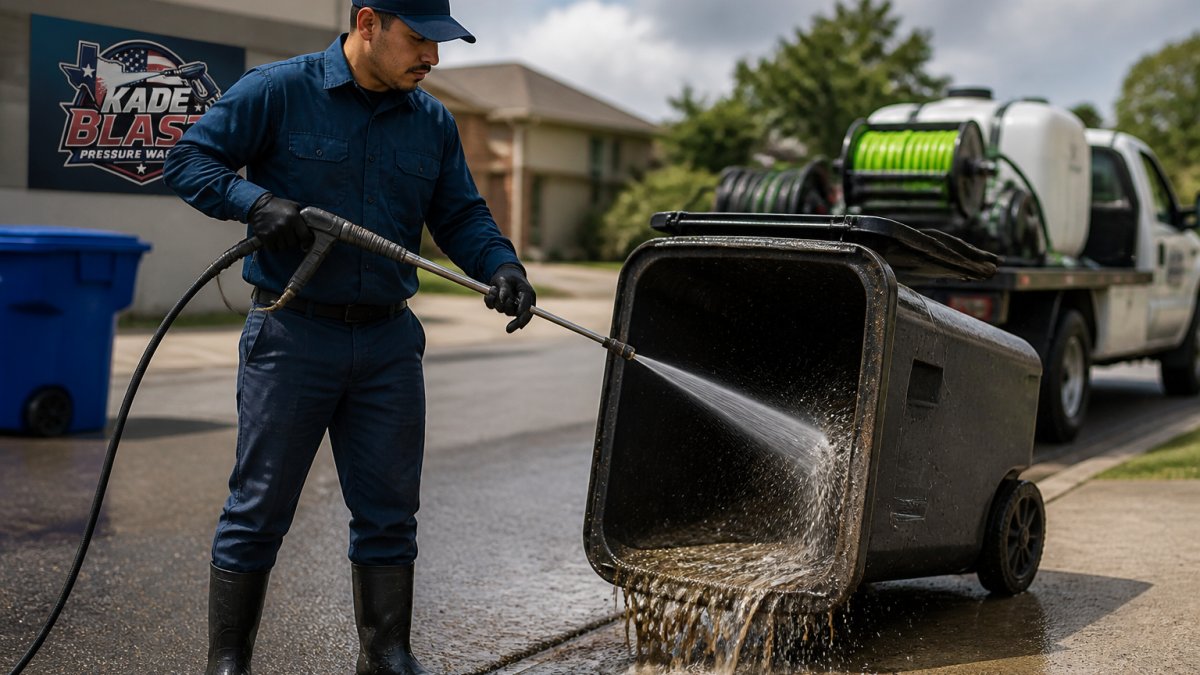
The whole job usually takes a few minutes per bin. The mess stays contained, which is a main reason people book curbside service instead of doing it in their own driveway.
Cleaning vs. Sanitizing Trash Cans: What the Difference Means for Germs
Cleaning and sanitizing are two different jobs, and most people use the words interchangeably. They shouldn't.
Cleaning is the physical removal of dirt, grime, grease, and organic waste. Sanitizing is treating a surface to reduce bacteria to a level public health standards consider safe. Cleaning always comes first, because a sanitizing solution can't reach germs buried under a layer of sludge.
Here's the practical version:
| Step | What It Does | What It Removes |
|---|---|---|
| Rinse | Loosens surface debris | Loose food scraps, liquid waste |
| Pressure wash | Lifts stuck-on grime | Grease, caked residue, mold film |
| Sanitize | Reduces bacteria on contact | Germs, viruses, odor-causing microbes |
| Deodorize | Neutralizes smell | Odor molecules left behind |
A garden hose handles the first row. It rarely touches the other three.
What 'Kills 99% of Bacteria' Really Means (and How to Check It)
A "kills 99% of bacteria" claim means the product or process reduced a specific test organism on a test surface under lab conditions.
That's the part most guides skip. Kill-rate claims depend on three things: which germs were tested, how much contact time the solution got, and how clean the surface was beforehand.
So how do you check a provider's claim?
- Ask which sanitizing solution they use and whether it's EPA-registered for the stated use.
- Ask how long the solution stays on the surface before rinsing.
- Ask whether they pre-clean before sanitizing, since contact time means little on a dirty surface.
The U.S. Environmental Protection Agency's guidance on registered disinfectant claims explains how these claims are tested and labeled.
Questions to Ask Before You Book a Provider
Run through this list before you hire anyone:
- What cleaning solution and sanitizing agent do you use?
- How long does the sanitizer stay on the surface?
- Do you pre-clean before sanitizing?
Seeing real before-and-after results helps too. You can see an actual job to judge the difference for yourself.
Odor, Pests, and Stuck-On Grime: What Cleaning Removes and What It Can't
Odor and pests share one cause: leftover organic waste. A dirty bin holds food residue, liquid that has seeped into cracks, and a film of grease that flies and other pests feed on.
Professional cleaning removes the residue, flushes out the cracks, and deodorizes the can. That breaks the cycle. Fewer food sources mean fewer flies, less odor, and less mold growth on the walls.
What it can't do is fix a bin that's cracked, warped, or missing a lid.
How Often to Clean Garbage Bins in Hot Climates
Frequency is not just a comfort question. It is a recontamination question. Every time you add a bag of food waste, you reintroduce the moisture, grease, and organic film that bacteria, flies, and mold need. Heat accelerates that cycle, which is why a bin that stays acceptable through a mild spring can turn foul in a week of summer sun.
A practical way to think about it: the bin should be cleaned before the residue layer becomes visible and before odor persists after the lid is closed. For most households, that means:
- Summer months: monthly, or every two to three weeks if the bin sits in direct sun or holds pet waste or diapers.
- Spring and fall: every six to eight weeks.
- Winter: quarterly is usually enough, though indoor garages and heated storage areas stay warm enough to speed growth.
Why Heat Changes the Math
Bacteria and mold reproduce faster in warm, moist conditions. A bin in direct summer sun can hold an internal temperature well above ambient, and the bottom of the can stays damp long after the walls dry.
Professional cleaning changes the timeline because it removes the food source and the film, not just the visible scraps. But it does not sterilize the bin, and it does not prevent recontamination.
What Frequency Cannot Fix
No cleaning schedule repairs a bin that is cracked, warped, or missing a lid. Water gets into cracks that cleaning cannot reach, and a lid that does not seal invites flies and rain back within days. If your can is falling apart, cleaning slows the problem but will not solve it; replacement is the honest answer.
Recurring service takes the guesswork out of the schedule. Monthly cleaning can be easier to keep up with than remembering to scrub a bin on a Saturday, and it helps keep the bin from reaching the point where odor and pests are already established.
The Best Cleaner for Trash Cans (and a Safe DIY Method)
The best cleaner for trash cans is one that cuts grease, rinses clean, and is safe around pets and family. For a DIY job, that usually means a degreasing dish soap or a dedicated bin cleaner, a stiff brush, and a hose. Skip bleach unless the label says it is safe for plastic bins, and never mix cleaning products, mixing can release dangerous gases.
A safe DIY method:
- Put on gloves and eye protection, and move the bin to a spot where runoff will not stain or pool.
- Empty it completely and scrape out loose debris.
- Spray the inside with a degreaser and let it sit for the contact time on the label, usually several minutes.
- Scrub the walls and floor with a stiff brush, paying attention to the bottom corners.
- Rinse thoroughly and dispose of the runoff where it will not run into storm drains.
- Let the bin dry in the sun with the lid open, then deodorize.
Safety and Environmental Handling
Bin runoff is not clean water. It carries grease, food particles, bacteria, and whatever cleaning product you used. Never wash it into a storm drain; that water goes straight to local waterways without treatment (the EPA).
Keep pets and children away until the bin is fully dry. Most sanitizing and deodorizing products are safe once dry, but the wet stage is when exposure risk is highest.
What DIY Cannot Do
DIY costs less up front, but it takes an afternoon, leaves a mess, and rarely reaches the caked layer at the bottom. More importantly, DIY does not give you a documented sanitation step. A garden hose and dish soap clean; they do not sanitize in any measurable sense. If you want a kill-rate claim you can evaluate, you need a product label with an EPA registration number and a stated contact time, and you need to follow it.
How to Verify a Provider's Sanitation Process
If you hire out, ask questions that separate a rinse-and-spray operation from a real sanitation process:
- Which sanitizing product do you use, and is it EPA-registered for this use?
- What is the required contact time, and do you actually let it sit that long?
- Do you pre-clean before sanitizing? Contact time means little on a dirty surface.
A provider who can answer these clearly is often doing the work properly. A provider who cannot may be selling a pressure rinse.
Professional service uses commercial high-pressure equipment, specialized sanitizing agents, and pet- and family-safe deodorizers, and the runoff is contained. You also do not need to be home, and booking and payment take under a minute online. What it cannot do is sterilize the bin or prevent recontamination, no service can. It removes the conditions bacteria need, and routine cleaning keeps them from coming back.
Frequently Asked Questions
Does pressure washing a trash bin kill germs?
Pressure alone does not reliably kill bacteria; it removes the grime, grease, and organic waste where germs live. What kills bacteria is the combination of hot water, a sanitizing solution, and enough contact time on the surface. A provider that pressure-washes with cold water and no sanitizer will leave the bin looking cleaner but may not reduce bacteria much. Ask what temperature the water reaches and which sanitizing agent is applied, then how long it stays on the surface before the final rinse.
What is the difference between cleaning and sanitizing a trash bin?
Cleaning removes visible dirt, grime, and organic waste. Sanitizing reduces bacteria on a surface to a level considered safe by public health standards. Cleaning vs. sanitizing trash cans is a two-step job: you cannot sanitize a bin that still has caked-on residue, because the dirt shields germs from the sanitizer. A good professional trash bin cleaning process flushes out the bin first, then applies a sanitizing solution to the cleaned surface, then deodorizes. Skipping the removal step makes any kill-rate claim meaningless.
How often should garbage bins be cleaned?
In hot, humid conditions, weekly or biweekly cleaning keeps bacteria and odor from building up. Cooler climates can stretch to monthly. Households that put food scraps, pet waste, or diapers in the bin need the shorter interval. If you notice flies, a sour smell that lingers after trash pickup, or a visible film on the inside walls, you are already overdue. Many homeowners choose a recurring monthly plan and add an extra cleaning in summer.
What cleaner kills the most bacteria in a trash can?
Bleach is the strongest common household disinfectant, but it is harsh on plastic, dangerous to mix with other cleaners, and risky around pets. Vinegar kills some bacteria but is not a registered disinfectant and does not handle grease well. For most bins, the best cleaner for trash cans is a degreaser to strip organic waste followed by a sanitizing solution designed for the surface. Whatever you use, follow the label contact time; most sanitizers need the surface to stay wet for a set number of seconds to work.
