Last Updated: October 31, 2026
Quick Summary
Clean trash cans on a baseline schedule of weekly for kitchen cans, monthly for outdoor bins, and quarterly for everything else. Move up one frequency tier if the bin holds food waste, diapers, or pet waste, or if odor returns within a few days of a wash.
- A quick weekly wash handles most kitchen trash cans, taking about 15 minutes.
- Give outdoor garbage bins a full wash once a month during warm weather.
- Recycling bins usually need only a rinse and scrub quarterly.
- Skip the drying step and a damp bin grows mold within days.
- Never mix bleach with vinegar, ammonia, or other cleaners.
Table of Contents
- A Cleaning Schedule by Bin Type and Use
- How to Clean a Kitchen Trash Can in 6 Steps
- How to Clean Outdoor Garbage Bins Without the Mess
- The Best Cleaner for Trash Cans and What to Avoid
- How to Get Rid of Trash Can Odors for Good
- When to Clean More Often: Heat, Pests, and High-Risk Contents
- Book a Professional Bin Cleaning and Skip the Scrub
- Frequently Asked Questions
A Cleaning Schedule by Bin Type and Use
Most people guess at how often to clean trash cans, and that guess usually falls somewhere between "rarely" and "when it smells." Knowing when to clean trash cans properly makes the difference. The honest answer depends on what goes in the bin and where it sits. A kitchen can that holds food scraps needs far more attention than a garage bin full of cardboard.
The bins that smell worst are often the ones nobody washed on a schedule. Here is a simple rule to start with: clean kitchen cans weekly, outdoor bins monthly, and everything else quarterly. Adjust from there based on the factors below.
A Baseline Schedule You Can Actually Follow
Published recommendations for trash can cleaning range from weekly to yearly, which is why the question feels unanswerable. The schedules conflict because they assume different contents and climates. Use this baseline, then apply the adjustment rules underneath it.
| Bin Type | Routine Cleaning | Deep Clean | Clean More Often If |
|---|---|---|---|
| Kitchen trash can | Weekly wipe down | Monthly | You cook daily, toss food scraps, or bag raw meat packaging |
| Outdoor garbage bin | Monthly wash | Quarterly | Warm weather, pests, leaks, or food waste |
| Recycling bin | Quarterly rinse | Twice yearly | Containers arrive dirty, sticky, or holding liquid |
| Compost bin | Weekly | Monthly | Contents stay wet or fruit flies appear |
| Diaper or pet waste bin | Twice weekly | Monthly | Odor returns within a day or two of cleaning |
Adjustment Rules That Resolve the Conflicting Advice
Rather than memorizing a single number, apply these rules to whatever bin you own:
- Move up one frequency tier if the bin holds food waste, diapers, or pet waste. These contents break down fast and draw pests.
- Move up one tier during warm months, or if the bin sits in direct sun or an enclosed garage where heat builds.
- Move up one tier if odor returns within a few days of a wash, or if you see flies, maggots, or rodents around the bin.
- Move down one tier only if the bin holds dry, non-food waste and stays dry, for example, a garage bin for cardboard and packaging.
Bins holding food waste in warm weather generally need attention more often than dry recycling bins, which can often go a full quarter without a wash.
Indoor Kitchen Bins
Wash your kitchen trash can every week. Food residue, spills, and leaks build up fast, and a warm kitchen turns that residue into odor within days.
A quick weekly wash handles most homes. If you cook often or toss raw meat packaging, bump it to twice a week. Line the can, wipe the lid, and rinse the interior. That routine keeps bacteria from settling in.
Outdoor and Recycling Bins
Give outdoor garbage bins a full wash once a month during warm weather and every other month when it is cool. Recycling bins need less: a rinse and scrub quarterly usually does it, unless liquids leak.
Outdoor bins that sit in the sun all day can speed up odor and pests, so monthly cleaning is a sensible minimum for any outdoor bin that holds food waste.
Tailor the Schedule to What Goes In
Location alone does not determine frequency, contents do. A kitchen bin that only holds dry packaging behaves more like a recycling bin, while an outdoor bin that collects bagged pet waste behaves more like a kitchen can. Match the schedule to the contents first, then adjust for heat and pests.
How to Clean a Kitchen Trash Can in 6 Steps
Cleaning a kitchen trash can takes about 15 minutes. Follow these steps to remove grime, kill odor, and get the bin back in place fast.
- Take it outside. Empty the bag and move the can to a driveway or yard.
- Rinse the interior. Use a hose or a bucket of warm water to loosen food residue.
- Scrub with soap. Add a few drops of dish soap and scrub the sides, bottom, and lid with a brush.
- Disinfect. Spray an antibacterial cleaner inside and let it sit for a few minutes.
- Rinse and dry. Rinse well, then dry the can in the sun before relining it.
- Wipe the lid and exterior. A quick wipe down keeps the outside clean too.
Watch out: skipping the drying step traps moisture, and a damp bin grows mold within days. Let it air dry fully in the sun.
How to Clean Outdoor Garbage Bins Without the Mess
Outdoor bins collect the worst of it: caked-on grime, leaks, and flies. The trick is to work fast and contain the runoff so you are not scrubbing the driveway afterward.
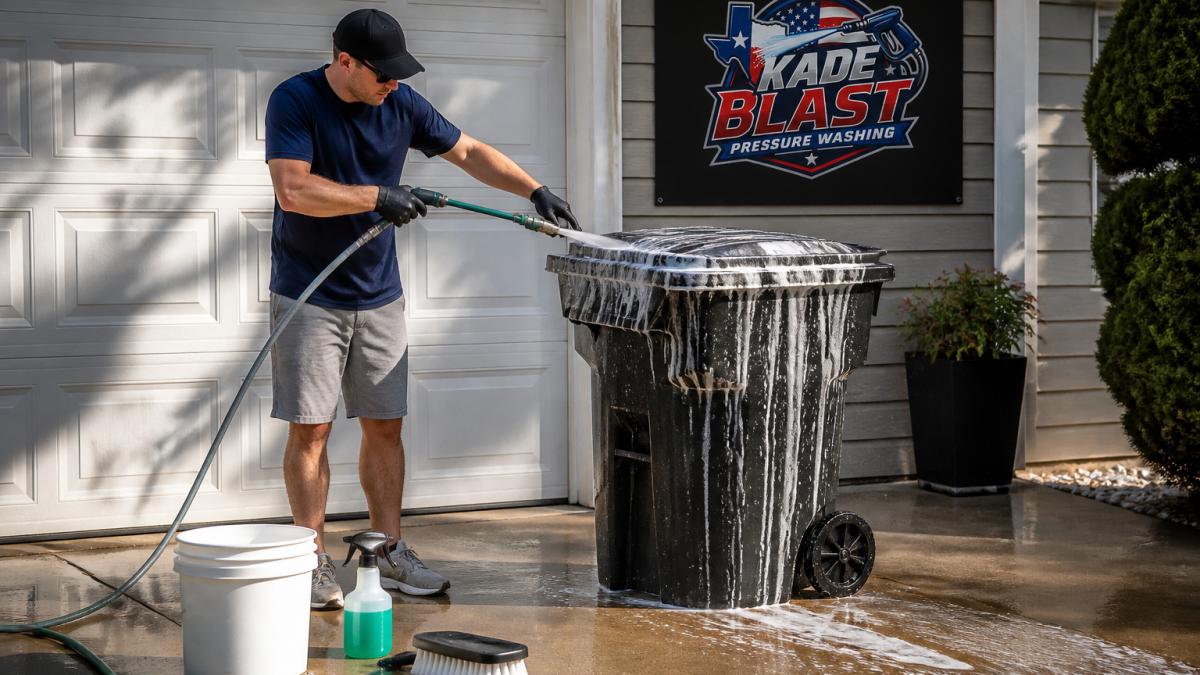
Start by emptying the bin and tipping it on its side. Rinse the interior, then scrub the walls and bottom with a stiff brush and a strong cleaner.
The mess is the hard part. Runoff carries bacteria and odor, and some homeowners prefer to have bins cleaned by a professional service instead of doing it by hand.
The Best Cleaner for Trash Cans and What to Avoid
The best cleaner for trash cans is a simple mix of dish soap, warm water, and a disinfectant. You do not need specialty products to get a clean, odor-free bin.
For routine cleaning, use:
- Dish soap for cutting grease and food residue
- White vinegar to break down odor
- An antibacterial cleaner for sanitizing
- Baking soda to absorb smells between washes
Avoid bleach-heavy products on plastic bins, since they can degrade the material over time. Skip harsh solvents too. They leave fumes that linger inside a closed can.
A common mistake is masking odor with air freshener instead of cleaning. That covers the smell for a day and leaves the bacteria behind.
How to Get Rid of Trash Can Odors for Good
Getting rid of trash can odors for good means removing the source, not covering it. Odor comes from bacteria feeding on food residue and leaks. Kill the bacteria and the smell goes with it.
Why Odor Keeps Coming Back
Most lingering trash can smells live in places a quick wipe misses: the seam where the bottom meets the sides, the underside of the rim, the lid hinge, and the small drainage holes in outdoor bins. Residue collects there, stays damp, and keeps feeding bacteria between washes. That is why a bin can smell fresh the day you clean it and sour again by the end of the week.
A Safe Cleaning Sequence
Sanitation matters as much as scrubbing. Follow this order to clean safely and effectively:
- Put on gloves and work outdoors or in a ventilated space. Never mix cleaning products, combining bleach with vinegar or ammonia-based cleaners can release dangerous fumes.
- Remove loose debris first. Empty the bin and rinse out solids before applying any cleaner.
- Wash with soap and warm water. Dish soap cuts grease and food residue. Scrub the seams, rim, lid, and drainage holes, not just the flat walls.
- Apply a disinfectant and respect contact time. Most disinfectants need the surface to stay wet for the time listed on the label, often several minutes, to work (the EPA). Read the label rather than guessing.
- Rinse thoroughly. Leftover cleaner residue can attract grime and leave fumes inside a closed can.
- Dry completely, ideally upside down in the sun. Moisture is what lets mold and bacteria return.
A Between-Clean Maintenance Routine
A five-minute routine between deep cleans prevents most odor problems:
- Use liners consistently and replace them before they tear or leak.
- Rinse anything that leaks as soon as you notice it, rather than letting it sit until wash day.
- Wipe the lid and rim weekly, since hands and bags transfer residue there.
- Keep a box of baking soda at the bottom to absorb moisture between cleanings.
- Check the drainage holes on outdoor bins and clear any clogs so water does not pool.
When Odor Means Something Deeper
If odor returns within days of a full wash, the grime is deeper than the surface. Professional cleaning can reach some cracks and seams that a quick scrub may miss. Persistent odor can also signal a leak trapped under a liner or a clogged drainage hole, both worth checking before you wash again.
When to Clean More Often: Heat, Pests, and High-Risk Contents
Heat, pests, and certain contents all call for a frequency adjustment. In warm weather, bacteria multiply faster, so bins that were fine monthly need cleaning every two weeks.
Clean more often when you notice:
- Odor that returns fast
- Visible dirt, spills, or leaks
- Flies or maggots around the bin
- Food waste, diapers, or pet waste in the can
Those high-risk contents break down quickly and can draw pests. For a deeper routine on pest control, see our guide on how to keep flies away from trash, which pairs well with a regular wash schedule.
Seasonal cleaning matters too. Warmer seasons mean more frequent washes, while cooler months let you stretch the interval.
Book a Professional Bin Cleaning and Skip the Scrub
Hand-scrubbing works, but it can be messy, time-consuming, and easy to skip. Professional bin cleaning is another option for those who would rather not do it themselves.
If you want to compare options before booking, our guide to the best trash bin cleaning service breaks down methods. And if you are wondering whether a pro wash actually sanitizes, read does professional bin cleaning kill bacteria to see how hot water and sanitizers work.
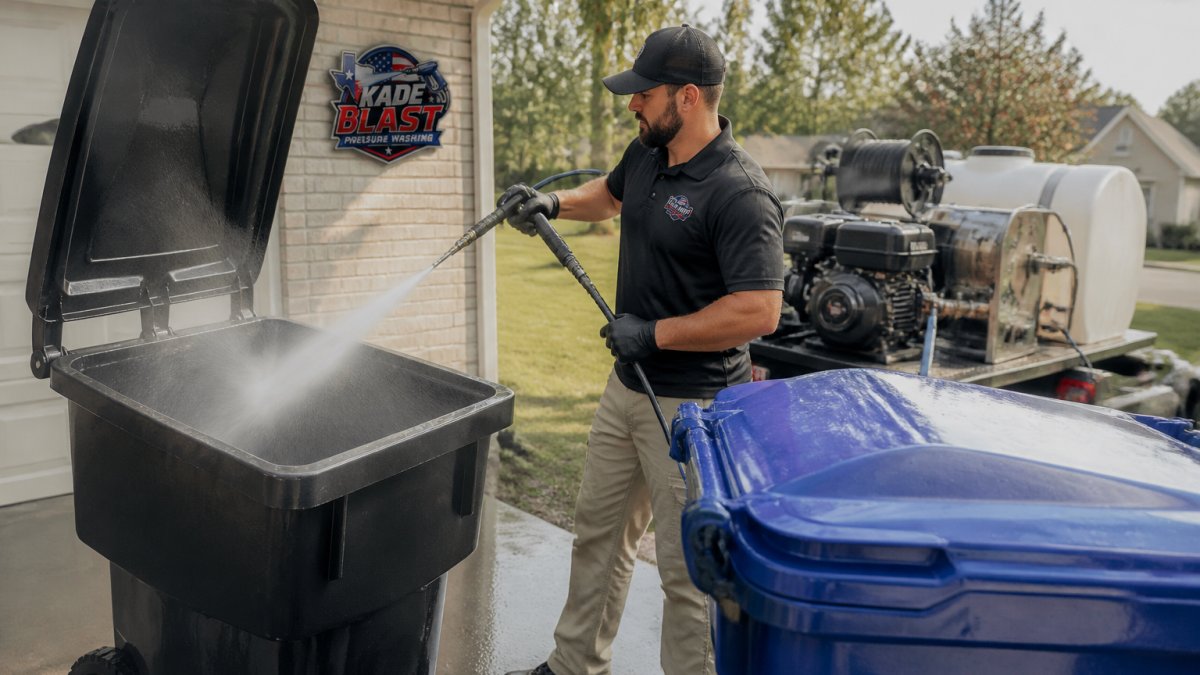
At Kade Blast Pressure Washing, you do not need to be home for the service. Our process uses commercial high-pressure blast technology, specialized sanitizing agents, and eco-friendly deodorizers. You can book and pay online in under a minute, and recurring monthly plans are available.
Frequently Asked Questions
How often should you clean your trash cans?
Kitchen trash cans need a wipe-down weekly and a full wash monthly. Outdoor garbage bins often go several weeks between deep cleans, but more frequent rinses can help in hot weather. Recycling bins generally need less frequent cleaning unless they get sticky. Any bin holding food waste, diapers, or pet waste should be cleaned more often, and you should clean immediately whenever you notice odors or visible grime.
Can I use vinegar to clean my garbage can?
Yes. White vinegar mixed with warm water cuts through food residue and neutralizes many odors without harsh fumes. For a stronger clean, add a few drops of dish soap and scrub the interior with a stiff brush. Vinegar works well as a routine cleaner, but for caked-on grime or bacteria buildup, a disinfecting cleaner labeled for household surfaces gives you a more thorough result.
How do you clean a trash can that smells bad?
Empty the bin, then wash the interior with hot water and dish soap, scrubbing the base and corners where residue collects. Rinse well and let it dry in the sun, since sunlight helps kill odor-causing bacteria. Sprinkle baking soda inside once dry to absorb lingering smells. If the odor persists after two cleanings, check for leaks under the liner or cracks where liquid has seeped into the plastic.
Is it necessary to clean trash cans if I use liners?
Yes. Liners tear, leak, and trap moisture, so residue still reaches the plastic. A liner also holds odors against the bin walls between changes. A quick weekly wipe-down and a monthly wash keep bacteria and smells from building up, and it protects the bin itself from stains and pest attraction. Skipping it is how a bin ends up needing a deep clean or replacement.
So how often should you clean trash cans? Weekly for the kitchen, monthly for outdoor bins, and more often when heat or pests move in. If the scrubbing keeps slipping down your list, let us take it off your hands. Get started with Kade Blast Pressure Washing and enjoy odor-free bins without lifting a brush.
