Last Updated: October 25, 2026
Quick Summary
You can book professional trash bin cleaning online in about a minute: enter your address, select your bins, pick a one-time or recurring plan, choose a service date, and pay by card to confirm instantly. The crew then cleans your empty bins curbside on service day, and you don't need to be home.
- Address verification comes first, since providers only serve specific zones.
- Recurring plans are usually monthly or every four weeks and cost less per visit than one-time cleanings.
- Schedule cleaning right after trash pickup, while bins are empty.
- Compare plans on cost per bin per visit, not the headline monthly price.
- If bins aren't out or accessible, some providers still charge for the trip.
Table of Contents
- Why Booking Professional Trash Bin Cleaning Online Beats DIY
- Online Trash Bin Cleaning Booking: A Step-by-Step Walkthrough
- The Trash Bin Cleaning Process: What Happens on Service Day
- How Often to Clean Trash Bins for Odor and Bacteria Control
- Trash Can Cleaning Service Cost: How to Compare Plans and Total Cost
- Cancellations, Rescheduling, and Managing Your Recurring Plan
- Book Your Bin Cleaning with Kade Blast Pressure Washing
- Frequently Asked Questions
Why Booking Professional Trash Bin Cleaning Online Beats DIY
Booking professional trash bin cleaning online is the fastest way to get odor-free, sanitized cans without spending a Saturday hunched over a hose.
The DIY approach has a hidden cost.
Then there's the smell. A quick rinse knocks down surface grime but leaves the film on the walls and lid where odor-causing bacteria settle in.
Time matters too. Scrubbing, rinsing, and drying four bins eats an afternoon.
Below, we walk through how to book, what happens on service day, how to compare plans, and how often you need this done.
Online Trash Bin Cleaning Booking: A Step-by-Step Walkthrough
The whole online booking process typically takes about a minute: enter your address, pick a plan, pay, and get a confirmation.
Here's the typical sequence for professional cleaning services.
- Enter your address. The system checks whether you're inside the service area before anything else.
- Select your bins. Choose how many trash and recycling bins you want cleaned and note any extras.
- Pick a plan. One-time cleaning or a recurring schedule, usually monthly or every four weeks.
- Choose a service date. Available slots appear based on your route and collection day.
- Pay online. Card payment confirms the appointment instantly.
- Get your confirmation. You'll receive an email or text with the date and any prep instructions.
Verifying Your Address and Service Availability
Address verification is the first real checkpoint. Providers serve specific zones, and checking your address upfront saves everyone a wasted trip. If your street falls outside the coverage map, the site tells you immediately rather than accepting a booking it can't fulfill.
For gated communities and long driveways, note your access details during booking. A gate code or a note that bins sit behind the garage helps the crew find them without knocking. If your bins are tucked in a tight spot, mention it, because professional equipment needs a workable angle.
Choosing a Plan, Paying, and Confirming Your Appointment
Plan selection is where customers choose. A one-time cleaning suits a move-in, a post-renovation cleanup, or a test run. A recurring plan keeps odor and bacteria from building back up, which matters more in hot climates where bins sit in direct sun.
Payment happens at booking, and the confirmation is your record. Save it: it tells you the date, what's included, and how to reschedule. Many systems let you shift the appointment online rather than calling.
How to Compare Plans and Calculate Your Total Cost
The sticker price on a plan is not the number that matters. What matters is your cost per bin per visit, and whether sanitizing, deodorizing, and wastewater disposal are included or billed separately. Build a small table before you book.
| What to compare | One-time cleaning | Recurring plan (monthly or every four weeks) |
|---|---|---|
| Price per visit | Usually the highest per-visit rate | Typically lower per visit than one-time |
| Bins included | Priced per bin, so count every can | Same per-bin logic, often with a volume break |
| What's included | Confirm sanitizing, deodorizing, wastewater capture | Confirm the same items are standard, not add-ons |
| Commitment | None beyond the single visit | Check pause, skip, and cancel terms |
| Best for | Moves, deep cleans, first try | Households that want odor control on autopilot |
To calculate your total cost, multiply the per-visit price by the number of visits you expect in a year, then add any listed fees (trip fees, extra-bin charges, late-change fees). Compare that annual figure against a pressure washer, cleaning solutions, and your own time.
For current plan details and rates, check the Kade Blast Pressure Washing pricing page.
The Trash Bin Cleaning Process: What Happens on Service Day
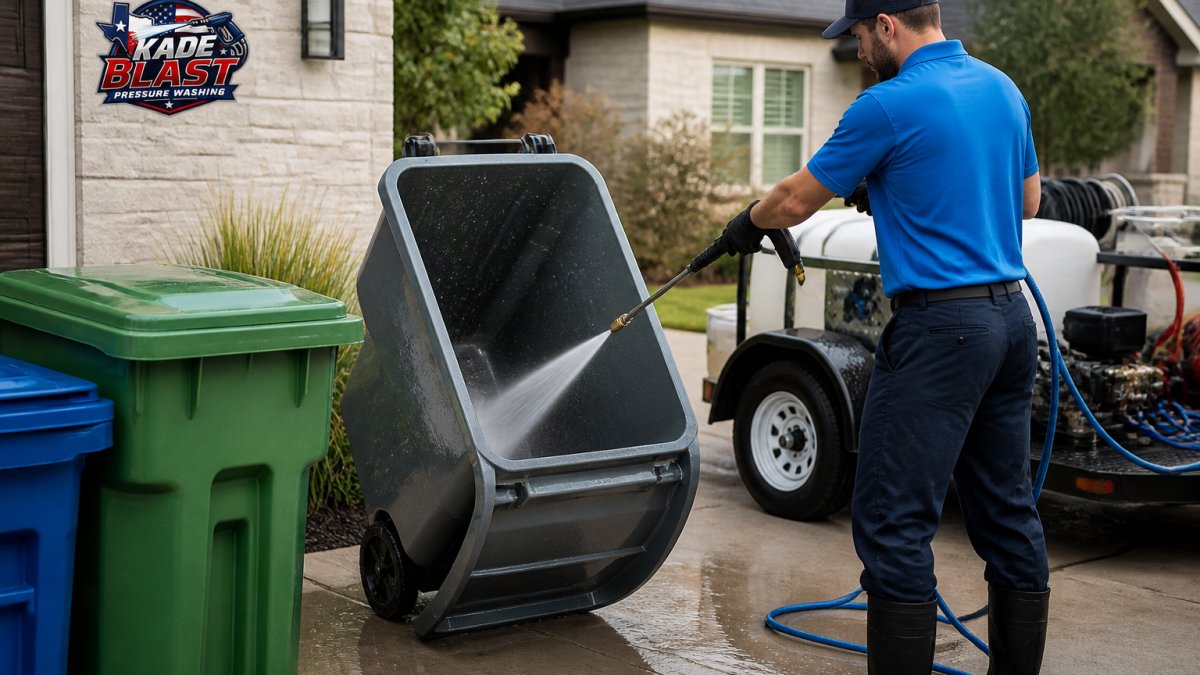
On service day, the crew cleans your empty bins curbside using commercial high-pressure equipment, sanitizing agents, and deodorizers, then returns them. You don't need to be home, and the visit usually takes minutes per bin.
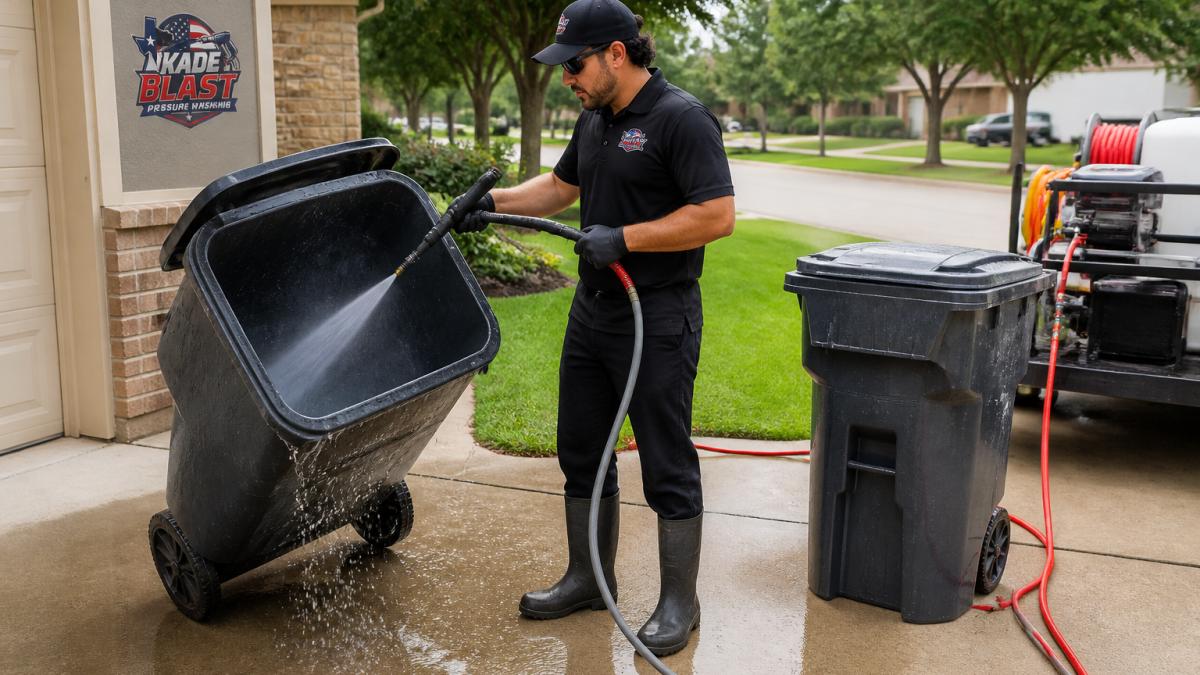
Timing matters. The best window is right after your trash and recycling get picked up, while the bins are empty. That's why scheduling often follows your collection day.
The crew empties and inspects each can, then blasts the interior walls, base, and lid with high-pressure water to strip caked-on grime.
How to Prepare Your Bins Before Pickup
Preparation is minimal, which is the appeal. Still, a few steps make the visit smoother:
- Roll bins to the curb or the agreed pickup spot the night before or by early morning
- Make sure bins are empty, with no bags left inside
- Clear a path if bins sit behind a gate or in a tight side yard
- Leave gate codes or access notes in your booking
- Remove anything stored on top of or inside the lids
Watch out: leaving a bag in the bottom of the can means the crew has to work around it, and that section won't get fully cleaned. Empty means empty.
What Happens If a Bin Is Missed, Still Full, or Blocked
Even a well-run route hits exceptions. Knowing the common ones helps you avoid a wasted visit.
- Bin still full. If collection ran late or you missed the truck, the crew may skip that bin because cleaning a full can spreads the mess rather than removing it. Most providers will note the skip and either reschedule or credit the visit, but the terms vary, so check the policy before you book.
- Bin not at the curb. If the crew can't reach the bin, the visit may be marked as attempted. Some providers charge for the trip; others roll it into the next scheduled visit. Leave access notes in your booking and roll bins out on time to avoid this.
- Blocked access. Cars in the driveway, locked gates, or bins behind a fence can stop the crew. A gate code or a short note during booking is the simplest fix.
- Extra bins. If you add a bin after booking, update the plan before the next visit. Crews route by bin count, and an unlisted bin may not get cleaned.
A confirmation email or text the day before service is the easiest way to catch these issues early. Read it, because it usually repeats the prep steps and the service window.
How Often to Clean Trash Bins for Odor and Bacteria Control
Many households do well with cleaning every four weeks, though hot weather and heavy use can justify more frequent visits. Monthly keeps bacteria and odor from rebuilding; quarterly works for lighter households or cooler seasons.
The answer depends on three things: how much waste you generate, how hot it gets, and whether your bins sit in sun or shade. In a warm climate, food residue breaks down fast, and a bin that smelled fine in winter can turn foul within weeks once summer hits. Households with pets, diapers, or frequent cooking need more frequent service.
Recycling bins are their own problem. Rinse residue from bottles and cans ferments, and the sugary film attracts pests. A recycling bin cleaning on the same schedule as your trash bins keeps both in check.
If you're unsure, start monthly and adjust. It's easier to stretch a schedule than to recover a bin that's been ignored for a season.
Trash Can Cleaning Service Cost: How to Compare Plans and Total Cost
Trash can cleaning service cost varies by provider, bin count, and frequency, so the sticker price isn't the whole story.
A few factors drive the total:
- Number of bins. More cans means a higher per-visit charge, though the per-bin rate often drops with volume.
- Frequency. Recurring monthly plans usually cost less per visit than one-time cleanings.
- What's included. Sanitizing, deodorizing, and wastewater disposal should be standard. Confirm they are.
- Contract terms. Some plans lock you in; others let you pause or cancel anytime.
The DIY comparison isn't as cheap as it looks.
To compare fairly, calculate your cost per bin per visit, then weigh it against how often you'd realistically clean them yourself.
| Plan Type | Best For | Visit Frequency | What to Check |
|---|---|---|---|
| One-time cleaning | Moves, deep cleans, first try | Single visit | Per-bin price, what's included |
| Monthly plan | Most households, hot climates | Every four weeks | Discount vs. one-time, cancel terms |
| Quarterly plan | Light use, cooler seasons | Every three months | Whether odor returns between visits |
Best for: households that want odor control without lifting a finger. Skip if: you have only one bin and clean it weekly already.
Cancellations, Rescheduling, and Managing Your Recurring Plan
Managing a recurring plan should take seconds, not a phone call.
Life gets in the way. A vacation, a schedule change, or bins that aren't out on the right morning can throw off a visit.
Watch out: if bins aren't accessible on service day, the crew may not be able to clean them, and some providers still charge for the trip.
Read the cancellation policy before you commit: how much notice is required, whether there's a fee, and how to pause for a season.
Book Your Bin Cleaning with Kade Blast Pressure Washing
Booking online is the easy part. The real work is choosing a provider that shows up, cleans thoroughly, and makes the schedule painless. We built Kade Blast Pressure Washing around commercial high-pressure equipment, specialized sanitizing agents, and eco-friendly deodorizers, with a fully contained process that leaves no mess behind.
Ready to stop holding your breath every time you open the lid? Book your bin cleaning with Kade Blast and get your trash and recycling bins fresh on a schedule that fits your household.
Frequently Asked Questions
How do I book a professional trash bin cleaning service online?
Enter your address on the provider's booking page to confirm service availability, choose a one-time or recurring plan, and pick your cleaning date. You pay online and get an appointment confirmation by email or text. The whole online trash bin cleaning booking flow usually takes under a minute. You do not need to be home, as long as your bins are curbside and accessible on collection day.
How often should trash bins be professionally cleaned?
Many households do well with cleaning every four weeks, especially through hot summers when odors build fast. Families with young kids, pets, or heavy kitchen waste may want monthly service, while smaller households can often stretch to every six to eight weeks. When deciding how often to clean trash bins, factor in heat, how full your bins get, and whether you compost.
How much does trash can cleaning service cost compared to DIY?
Trash can cleaning service cost depends on the number of bins, visit frequency, and whether you choose recurring or one-time service. DIY spray bottles and disinfectants add up over a season and still leave caked grime at the bottom. Compare providers by per-visit price, what is included like sanitizing and deodorizing, and total monthly cost across a year rather than the sticker price alone.
Do I need to be home when my trash bins are cleaned?
No. Curbside service is designed so technicians clean your empty bins after pickup without you present. Leave bins at the curb or in their usual accessible spot on service day. If a gate code, tight side yard, or locked enclosure blocks access, note it during booking so the crew can plan around it and avoid a missed visit.
