Table of Contents
- Why Flies Target Your Trash and How to Keep Flies Away
- Step-by-Step: How to Clean a Garbage Can to Stop Flies
- How to Keep Maggots Out of Trash Cans Before They Hatch
- Peppermint Oil to Repel Flies: What Works and What Doesn't
- How Often to Clean Trash Cans for Year-Round Control
- Deterrents Compared: Traps, Scents, and Vapor Treatments
- Troubleshooting Severe Infestations and Seasonal Fly Surges
- Frequently Asked Questions
Last Updated: October 20, 2026
Why Flies Target Your Trash and How to Keep Flies Away
Flies don't wander into your trash can by accident.
A female fly can lay eggs on a food scrap within hours of finding it.
Here's what most guides get wrong: they treat flies as a trapping problem. Traps catch what's already there.
So the real fix is three things:
- Cut off the food source
- Cut off the moisture
- Cut off the entry points
Bins with caked-on grime and pooled liquid at the bottom draw flies no matter how many traps sit nearby.
Step-by-Step: How to Clean a Garbage Can to Stop Flies
A thorough garbage can cleaning removes the residue flies feed on. Plan for 20 to 30 minutes per bin, and do it outside on a driveway or lawn so runoff doesn't pool.
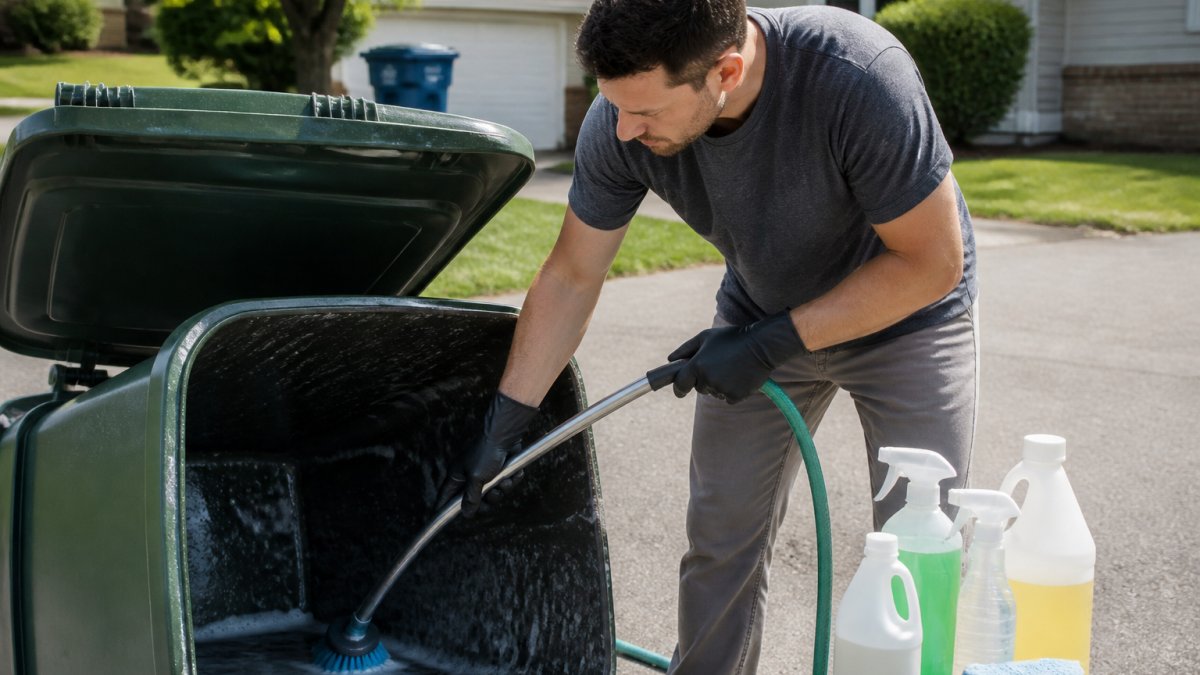
- Empty the bin completely and set the bag aside.
- Rinse the inside with a hose to loosen loose debris.
- Scrub the walls, lid, and bottom with a stiff brush and warm soapy water. Pay attention to the corners and the rim, where grime hides.
- Scrape off caked-on buildup with a putty knife if the brush won't cut it.
- Rinse again until the water runs clear.
- Flip the bin upside down and let it dry fully in the sun. Sunlight helps kill bacteria and dries out cracks where flies lay eggs.
- Spray the inside with a disinfectant once dry.
The mistake we see most often is skipping the lid. Flies land on the lid, and residue on the underside feeds them. Wipe it down every time.
If scrubbing a grimy bin by hand isn't how you want to spend a Saturday, that's where we come in.
How to Keep Maggots Out of Trash Cans Before They Hatch
Maggots are fly larvae, and their presence tells you a female fly found food, moisture, and a warm surface in your bin. The lifecycle is fast: depending on temperature and species, eggs can hatch within a day or so in hot weather, and larvae feed for several days before crawling off to pupate. That window is why "spray and hope" fails, you have to break the cycle at the egg and larvae stage, not just kill what you can see.
Prevention: cut the three inputs
Flies need food, moisture, and access. Remove any one and the bin stops being a nursery.
- Food: Bag all food waste in sealed bags before it goes in the bin. Rinse containers so no residue remains, a sticky juice bottle or a takeout container with sauce is enough to attract egg-laying flies.
- Moisture: Add an absorbent layer (newspaper, cardboard, or wood shavings) at the bottom to soak up drips. Pooled liquid is where larvae thrive.
- Access: Keep the lid closed at all times, and check that the lid actually seals. A warped or cracked lid lets flies in even when it looks shut.
- Schedule: Empty the bin on collection day and don't let bags sit an extra week in warm weather. The longer waste sits, the more time flies have to complete a generation.
If you already have maggots: a containment-first sequence
Don't just spray the surface. Work through this order:
- Contain. Put on gloves and move the bin away from the house, ideally to a driveway or lawn where runoff won't pool. Keep children and pets away from the area.
- Bag and remove. Double-bag the waste, tie it off, and get it to the outdoor collection point or dumpster immediately. Don't leave bagged waste beside the bin.
- Empty and scrape. Remove any remaining debris, including caked material in corners and along the rim. A putty knife reaches what a brush won't.
- Scrub hot. Wash the inside, lid underside, and bottom with hot soapy water. Pay attention to cracks, hinges, and the rim, larvae hide in crevices.
- Rinse and inspect. Rinse until water runs clear, then check for pooled liquid or missed spots. Repeat if needed.
- Dry fully in sun. Flip the bin upside down and let it dry completely. Larvae and eggs don't survive a clean, dry bin.
- Treat the surroundings. Sweep up spilled waste and rinse the ground where the bin sat, since residue there can re-attract flies.
- Reset prevention. Fresh absorbent layer, sealed bags, lid closed, and a weekly cleaning schedule until you've gone a full cycle without sightings.
When it's beyond DIY
If maggots keep returning after a thorough clean, or if you find them in cracks you can't reach, the bin itself may be the reservoir. Persistent infestations in shared dumpsters or bins that sit in direct sun are common. In those cases, a professional cleaning that reaches cracks and hinges, combined with a tighter collection schedule, is usually the practical fix.
Pet waste and diapers deserve their own plan. A dedicated, lidded bucket with wood shavings or another absorbent at the bottom keeps moisture down and odor contained, which keeps flies off. Empty it on a fixed schedule, more often in summer, rather than waiting for it to fill.
Peppermint Oil to Repel Flies: What Works and What Doesn't
Peppermint oil to repel flies works as a mild deterrent, not a cure. Flies dislike the strong scent, so a few drops on a cotton ball near the bin can help. It won't stop an active infestation.
What actually helps:
- Peppermint oil on cotton balls or a rag near the lid
- Essential oil sprays on the outside of the bin
- Apple cider vinegar and dish soap traps to catch adult flies
What doesn't:
- Relying on scent alone while food residue sits in the bin
- Spraying oil over wet garbage (it does nothing)
- Expecting a scent deterrent to kill maggots
Treat scents as a backup layer. Cleaning is the main event.
How Often to Clean Trash Cans for Year-Round Control
Cleaning frequency depends on the season and what you throw away. Here's a simple schedule:
| Situation | Cleaning Frequency |
|---|---|
| Summer, food waste in bin | Weekly |
| Winter, light use | Monthly |
| Pet waste or diapers | Weekly |
| Recycling bin | Monthly |
| After any maggot sighting | Immediately, then weekly |
In warm weather, weekly cleaning is the safe default. Heat speeds up odor and egg-laying, so a bin that was fine in January turns into a fly magnet by June.
Deterrents Compared: Traps, Scents, and Vapor Treatments
No deterrent replaces cleaning, but some help more than others, and the differences matter for safety, especially around children and pets. Here's a practical comparison, plus what is and isn't well established about each option.
| Deterrent | How It Works | Best For | Limits and Safety Notes |
|---|---|---|---|
| Sticky fly traps | Catch adults on contact | Quick knockdown near a bin or doorway | Doesn't stop breeding; place out of reach of pets and children, and replace when full |
| Apple cider vinegar + dish soap trap | Attracts flies with scent, soap breaks surface tension so they drown | Kitchens, patios, near bins | Adults only; refresh the mixture every few days; keep away from pets |
| Peppermint oil or other essential oils | Strong scent may deter some flies | Mild prevention on lids, rags, or cotton balls | Evidence is limited and inconsistent; never apply where pets or children can ingest it; essential oils can be toxic to cats and dogs |
| Vapor treatments (enclosed-space products) | Release an insect-killing vapor in a sealed space | Sealed bins, garages, enclosed storage | Only works in an enclosed space; follow label directions exactly, ventilate afterward, and keep people and pets out during treatment |
| Absorbent layer (newspaper, cardboard, shavings) | Soaks up liquid drips | Every bin | Requires regular changing; replace when saturated |
What is actually known about scent deterrents
Essential oils like peppermint are popular, but the evidence for repelling flies is limited and inconsistent. Many people find a strong scent helps somewhat, especially as a backup layer, but it is not a substitute for removing food and moisture.
Vinegar traps are a better-established option for catching adults. Apple cider vinegar attracts flies, and a drop of dish soap breaks the surface tension so they drown.
Vapor treatments: read the label first
Products that release an insect-killing vapor can reach insects in cracks and enclosed spaces, but they only work in a sealed environment. In an open outdoor bin, the vapor escapes and does little. If you use one, follow the label directions exactly, ventilate the area afterward, and keep people and pets out during treatment. Never use an outdoor insecticide inside a bin that will hold food waste or pet waste unless the label specifically allows it.
The bottom line on deterrents
Treat scents and traps as backup layers. Cleaning, sealing bags, rinsing containers, closing the lid, and cleaning on a schedule, is the main event. A deterrent that sits next to a grimy bin won't fix the problem, and a clean bin often needs no deterrent at all.
Troubleshooting Severe Infestations and Seasonal Fly Surges
A severe infestation needs a reset, not a touch-up. If flies swarm every time you open the lid, the bin itself is the source.
Work through this sequence:
- Empty and bag all waste immediately
- Scrub the bin inside and out with hot soapy water
- Check for cracks and pooled liquid, and clean them out
- Let the bin dry fully in the sun
- Set traps nearby to catch survivors
- Switch to weekly cleaning until the swarm clears
Seasonal surges hit hardest in summer, when heat and humidity speed up the fly lifecycle. Dumpsters and shared bins in gated communities are prime targets because waste sits longer.
This is where professional bin cleaning earns its keep.
Frequently Asked Questions
How do you keep flies away from trash cans?
Start with the basics: keep the bin lid closed, bag all food scraps in sealed trash bags, and rinse containers before tossing them. Add an absorbent layer of newspaper or cardboard at the bottom to soak up liquid drips that attract flies. Clean the bin regularly with soap and water, and consider scent deterrents like peppermint oil around the rim. If flies keep returning, check for pooled liquid or residue under the bag, since that is often the hidden source.
Does peppermint oil repel flies?
Peppermint oil to repel flies is a popular home remedy, and many homeowners report fewer flies around treated bins. The strong menthol scent appears to discourage some insects, but there is limited scientific proof it eliminates an active infestation. Use it as a supplement to cleaning, not a replacement. Dilute a few drops in water, spray around the bin lid and exterior, and reapply after rain or washing. Keep it away from pets and children, and test a small area first.
How often should you clean an outdoor garbage can?
Rinse the bin weekly with a hose and a quick scrub, and do a full soap-and-water wash every two to four weeks. During warm weather or if you notice odor, maggots, or pooled liquid, clean it more often, sometimes twice a month. If your bin sits in direct sun or holds pet waste, shorten the schedule. A consistent routine stops food residue and liquid drips from building up, which is what draws flies in the first place.
How do you keep maggots out of a trash can?
Maggots come from flies laying eggs on food scraps, so the fix is removing their breeding ground. Seal all organic waste in tied bags, keep the lid closed, and clean the bin thoroughly to remove residue and liquid. Add an absorbent layer of newspaper or wood shavings to soak up drips. In warm weather, empty the bin more often and rinse it weekly. If maggots appear, wash the bin with hot soapy water, dispose of the contents, and treat the interior with a pet-safe sanitizer.
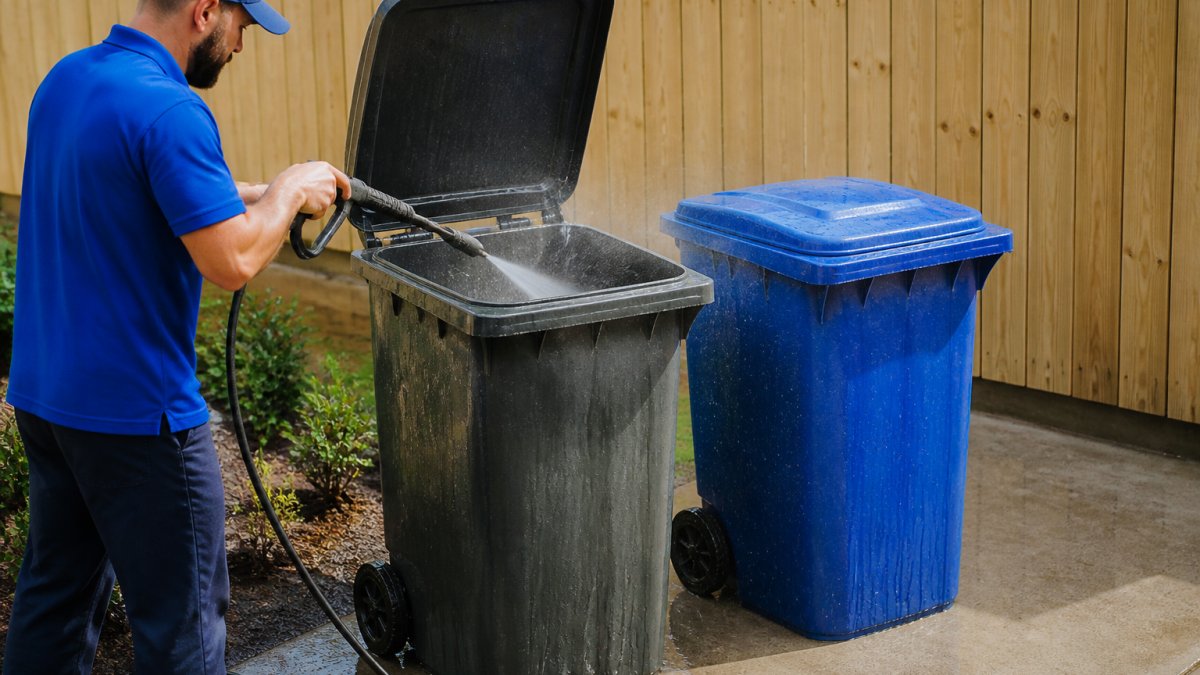
Flies in your trash are a symptom of a dirty bin, and the fix starts with a real cleaning routine. If scrubbing grimy bins by hand isn't working, Kade Blast Pressure Washing can help. Our high-pressure blast technology, bacteria-killing sanitizing agents, and fully contained process leave your bins odor-free without you lifting a finger. Get started with Kade Blast Pressure Washing and book your first bin cleaning today.