Last Updated: November 1, 2026
Quick Summary
A secure lid, a stored can, and a clean rim are the most effective ways to keep raccoons away from trash. Fix the access first, then the smell, then the hiding spots. No spray or scent replaces a lid the raccoon cannot open.
- Raccoons raid bins for access, odor, and cover, so remove any one of the three.
- A rigid, wildlife-resistant cart with a locking lid is the highest-impact move.
- Set carts out shortly before collection, not the night before.
- Wash the bin with hot water and dish soap to remove the odor that draws raccoons back.
- Check local collection rules before drilling, bolting, or chaining a cart.
Table of Contents
- Why Raccoons Target Your Trash and What Actually Stops Them
- Pick a Raccoon-Proof Trash Can Before You Try Anything Else
- How to Secure Trash Can Lid From Raccoons: Straps, Locks, and Weights
- Raccoon Deterrents for Garbage Cans: What Works and What Wastes Money
- Bin Storage and Set-Out Timing That Cuts Raids
- How to Clean a Trash Can After Raccoons Have Been In It
- Troubleshooting Persistent Raids and Local Collection Rules
- Book a Bin Cleaning and Close the Door on Raccoons
- Frequently Asked Questions
Why Raccoons Target Your Trash and What Actually Stops Them
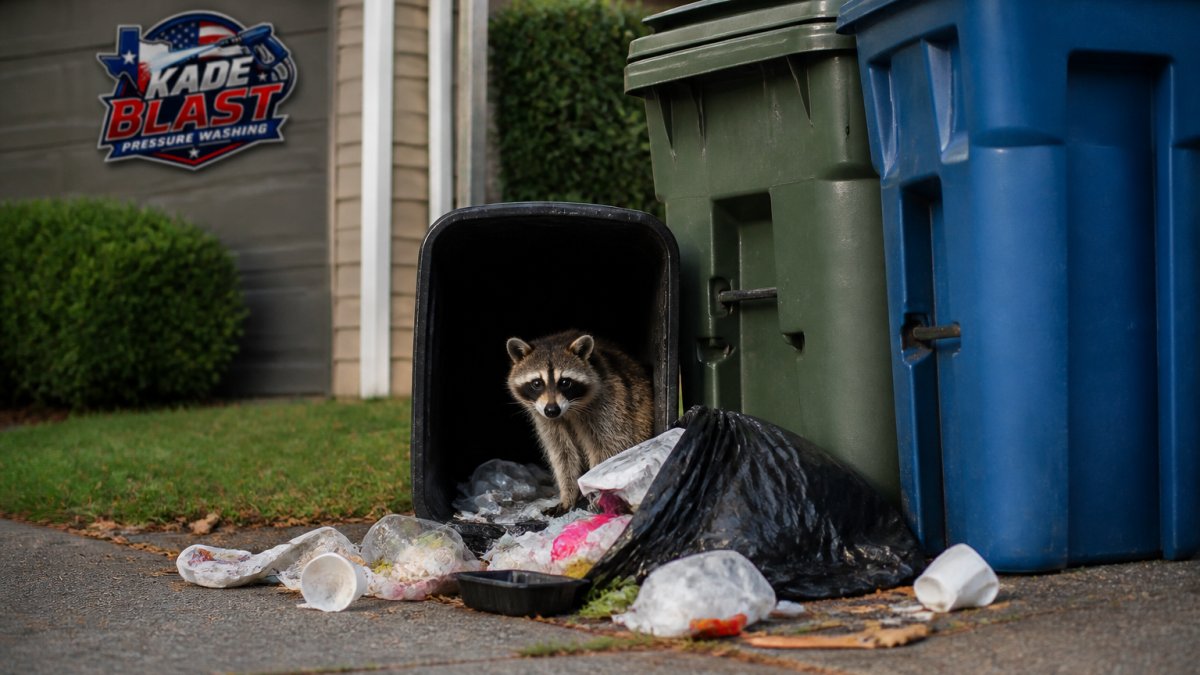
Raccoons raid trash cans because your bin is the easiest meal in the neighborhood. A secure lid, a stored can, and a clean rim are the most effective ways to keep raccoons away from trash.
Raccoons are smart, strong, and creatures of habit. Once one learns your pickup schedule, it returns most nights. The good news: their nightly visits follow a pattern you can break.
The Three Things Every Raccoon Needs From Your Bin
Raccoons keep coming back for three reasons. Take away any one, and the raids drop fast.
- Access: a lid they can pop, tip, or slide open
- Odor: the smell of food scraps that confirms a meal is inside
- Cover: a quiet, dark spot where they feel safe feeding
Most homes give raccoons all three. Fix the access first, then the smell, then the hiding spots. That order matters, and it's where most guides get it wrong.
Pick a Raccoon-Proof Trash Can Before You Try Anything Else
A rigid, wildlife-resistant cart with a locking lid and a heavy body is a strong starting point for a raccoon-proof trash can.
Why lead with the can? Because no bungee cord or spray fixes a flimsy bin. A thin plastic can flexes and cracks under a determined raccoon.
Look for these features:
- A locking or twist-latch lid that raccoons can't flip
- Thick, rigid walls that don't bend
- A wide, heavy base that's hard to tip
Check with your local waste department before you buy, since some cities and waste haulers offer wildlife-resistant carts.
How to Secure Trash Can Lid From Raccoons: Straps, Locks, and Weights
The strongest way to secure a trash can lid is a strap or lock that holds the lid tight against the can. Raccoons use their paws to pry and their weight to tip.
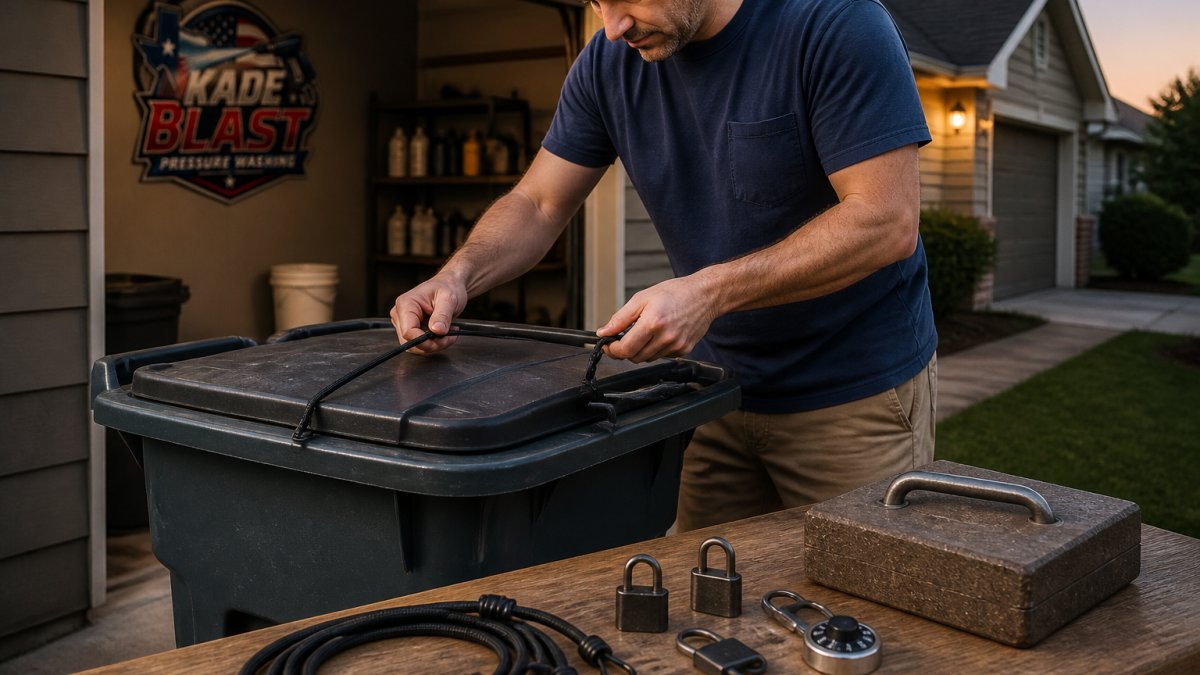
Here's how to secure trash can lids with the tools that actually hold:
- Bungee cords: stretch a heavy cord over the lid and hook it under both handles. Use two cords in a crisscross for carts.
- Rope tie-downs: loop a rope through the handle and over the lid, then knot it tight. Cheap and effective.
- Weights: set a heavy brick or a filled sandbag on top of a flat lid. Works well on sturdy cans.
Step-by-Step Lid Security by Bin Type
Different bins need different fixes. Match the method to the can you own.
| Bin Type | Best Security Method | Why It Works |
|---|---|---|
| Wheeled cart with handles | Bungee cord or padlock | Lid latches and handles give anchor points |
| Round metal can | Rope tie-down plus weight | Rigid walls resist prying and tipping |
| Square plastic bin | Heavy sandbag on flat lid | Weight stops the tip-and-flip move |
| Locking wildlife cart | Built-in latch or padlock | Designed to resist raccoon paws |
For any bin, tighten the lid so there's no gap. A raccoon that can't get a paw under the edge usually gives up.
Raccoon Deterrents for Garbage Cans: What Works and What Wastes Money
Most deterrents sold for raccoons are stopgaps, not solutions. The honest ranking below separates measures with a plausible mechanism from products that mostly separate you from your money, and flags the safety issues that matter around pets and kids.
What has some evidence behind it
- Ammonia-soaked rags: The sharp odor may discourage raccoons for a short time. Soak a rag, place it in a vented container near, not inside, the bin, and refresh it every few days as the smell fades. Keep it well out of reach of pets and children; ammonia is caustic and the fumes are irritating in enclosed spaces. Never pour ammonia into the bin itself, where it can splash or react with other waste.
- Motion-activated water sprinklers: A sudden spray can startle raccoons and interrupt the approach. The trade-off is habituation: raccoons may learn the spray pattern over time, so reposition the unit or use it intermittently. Drain and store it before freezing weather.
- Motion lights: Bright, sudden light can deter some animals, but urban raccoons are often unimpressed. Use lights as a secondary layer, not a primary defense, and aim them to illuminate the bin area rather than the whole yard.
What is unreliable or risky
- Cayenne pepper and capsaicin sprays: These can irritate a raccoon's eyes and nose, but rain washes them away, and repeated exposure breeds indifference. More importantly, drifted powder can irritate pets and children, and some animals groom it off and carry it indoors. If you use it, apply it sparingly around the bin's base, never on the lid where it can contaminate the handle, and reapply after rain.
- Ultrasonic repellents: Marketing claims are often strong, but independent results vary. Raccoons hear a wider range than humans, but they also habituate quickly to constant ultrasonic noise. Treat these as a maybe, not a fix.
- Poison and traps: Check your state's wildlife rules before using poison or traps, as handling or relocating raccoons may require a permit. Contact your state wildlife agency before you act.
How to layer deterrents without wasting money
- Secure the lid first (see the lid-security section above).
- Remove nearby food and cover, pet food, bird seed, compost, and brush piles.
- Add one motion-triggered deterrent, such as a sprinkler, and change its position every few days.
- Use scent deterrents only as a short-term bridge, and only where pets and children cannot reach them.
The pattern is consistent: deterrents fade and raccoons adapt. Spend your effort on access and odor, and treat everything else as a temporary nudge.
Bin Storage and Set-Out Timing That Cuts Raids
Where you store your bins and when you set them out matter as much as the lid.
Store bins in a garage, shed, or enclosed area whenever you can.
On pickup day, set carts out shortly before collection, not the night before. A bin sitting at the curb all night is an open invitation.
Small changes add up:
- Keep the garbage area tidy and free of spilled scraps
- Bag and tie all garbage before it goes in
- Freeze smelly food scraps until pickup day
Raccoons return to places that pay off. Make your bin a dead end and they move on.
How to Clean a Trash Can After Raccoons Have Been In It
Cleaning a raided can is about more than looks. Raccoons can carry germs, so a dirty bin can be a health concern, not just a smell (Raccoon latrines : identification and clean-up).
Start by bagging and removing all spilled trash. Then wash the inside with hot water and a degreaser or dish soap.
For stubborn odor and grime, a pressure wash can help. Our trash bin cleaning service uses commercial high-pressure equipment and sanitizing agents to strip caked-on mess and reduce bacteria.
A clean can removes the odor that draws raccoons back. It's a simple step that pays off.
Troubleshooting Persistent Raids and Local Collection Rules
If a raccoon is still winning after you have locked the lid and cleaned the bin, work through this decision tree in order. Each step isolates one failure point, so you stop guessing and start closing the actual gap.
Step 1: Is the lid actually defeated?
Inspect the lid at dusk, before the raid. Look for:
- Pry marks or a bent hinge: a raccoon has learned to work the edge. Replace the hinge or add a second strap across the lid.
- A gap at the seal: even a finger-width gap lets a paw in. Add weatherstripping or a heavier weight until the lid seats flush.
- A latch that pops under load: switch to a padlock through the hasp, or add a ratchet strap rated for outdoor use.
If the lid is intact, move to Step 2.
Step 2: Is the cart being tipped?
A tipped cart spills its contents and defeats the latch. Check the ground for drag marks and the cart for scuffs on one side.
- On level ground: add weight to the base, a sandbag inside the cart, under the bag, lowers the center of gravity.
- On a slope or soft ground: move the cart to a flat, hard surface, or anchor it with a stake and strap through the handle.
- Shared carts: if neighbors also set out carts, a tipped cart can be a neighborhood pattern. Coordinate set-out times.
Step 3: Is another food source still open?
Raccoons return to the easiest meal. Walk your property at night and check:
- Pet food bowls left outside
- Bird feeders within climbing distance of the bin
- Compost piles without a secure lid
Remove or secure each source. A single open pet bowl can undo a week of lid work.
Step 4: Is the raccoon entering the bin area from above or below?
Raccoons climb fences, squeeze under decks, and travel along rooflines. Look for:
- Climbable routes: tree limbs overhanging the bin, stacked pallets, or a fence the raccoon uses as a highway. Trim limbs back and remove climbable clutter.
- Gaps under structures: a shed or deck with a gap larger than a few inches is an invitation. Block it with hardware cloth buried a few inches into the ground.
Step 5: Check local collection rules before you modify anything
Many cities limit how long bins may sit at the curb and restrict cart modifications that interfere with automated collection. Before you drill, bolt, or chain a cart:
- Call your waste department and ask what modifications are allowed.
- Confirm the pickup window so you can set out late and bring the cart in promptly.
- Ask whether wildlife-resistant carts are available on request or at a reduced rate.
Following local rules keeps your cart compatible with collection equipment and avoids fines.
Step 6: When to call a wildlife professional
If raids continue after Steps 1-5, a humane wildlife professional is the next call. Look for a provider licensed in your state and ask about exclusion, meaning sealing entry points. If you find a young animal in or near a bin, do not handle it; contact your state wildlife agency or a licensed rehabilitator for guidance.
Book a Bin Cleaning and Close the Door on Raccoons
A locked lid and a clean can are the two habits that keep raccoons away from trash for good. One blocks access. The other removes the smell that brings them back.
That's the work we do at Kade Blast Pressure Washing. Our commercial high-pressure blast technology strips grime, and our sanitizing agents help address bacteria that cause odor.
Want to compare options first? See our guide to trash bin cleaning and find out whether professional recycling bin cleaning is worth it.
Frequently Asked Questions
What is the best way to secure a trash can from raccoons?
A raccoon-proof trash can with a locking lid is the most reliable starting point, then add a bungee cord, rope tie-down, or weight on top as a second layer. Raccoons are strong and dexterous, so a lid that only rests in place will not hold. Place the cart in a garage or shed when possible and set it out on pickup day shortly before collection time. Cleaning the bin to remove food odors matters too, since smell is what draws them back.
Do raccoon deterrents for garbage cans actually work?
Physical barriers work best. Bungee cords, padlocks, lock-boxes, and wildlife-proof cans stop access outright. Repellents like ammonia, cayenne pepper, or dish soap may discourage a raccoon briefly, but they wear off with rain and raccoons often adjust. Never use repellents as your only defense, and keep any chemical away from pets and children. Pair a secure lid with indoor storage and odor control for results that last.
Should I leave trash cans outside overnight?
Only if the bin is genuinely secure. Raccoons are most active after dark, so an unsecured cart left out overnight is an open invitation. Store carts in a garage, shed, or enclosure and set them out shortly before collection time rather than the night before. If you must leave them out, tie down the lid, remove accessible food scraps, and bag garbage securely so nothing is easy to reach.
How do I clean a trash can after raccoons get into it?
Empty the bin, bag and tie any loose garbage, then scrub the interior with hot water and a degreaser to remove caked-on grime and food residue. Rinse thoroughly and let it dry in the sun before replacing the lid. Raccoons carry bacteria and parasites, so wear gloves and wash your hands afterward. For deep odors baked in by summer heat, professional trash bin cleaning with high-pressure equipment and sanitizing agents reaches buildup a garden hose cannot.
Raccoons are persistent, but a sealed lid and a truly clean bin beat them every time. If you're tired of scrubbing and still fighting the smell, let us handle it. Get started with Kade Blast Pressure Washing and enjoy odor-free, sanitary bins on a convenient recurring plan.
