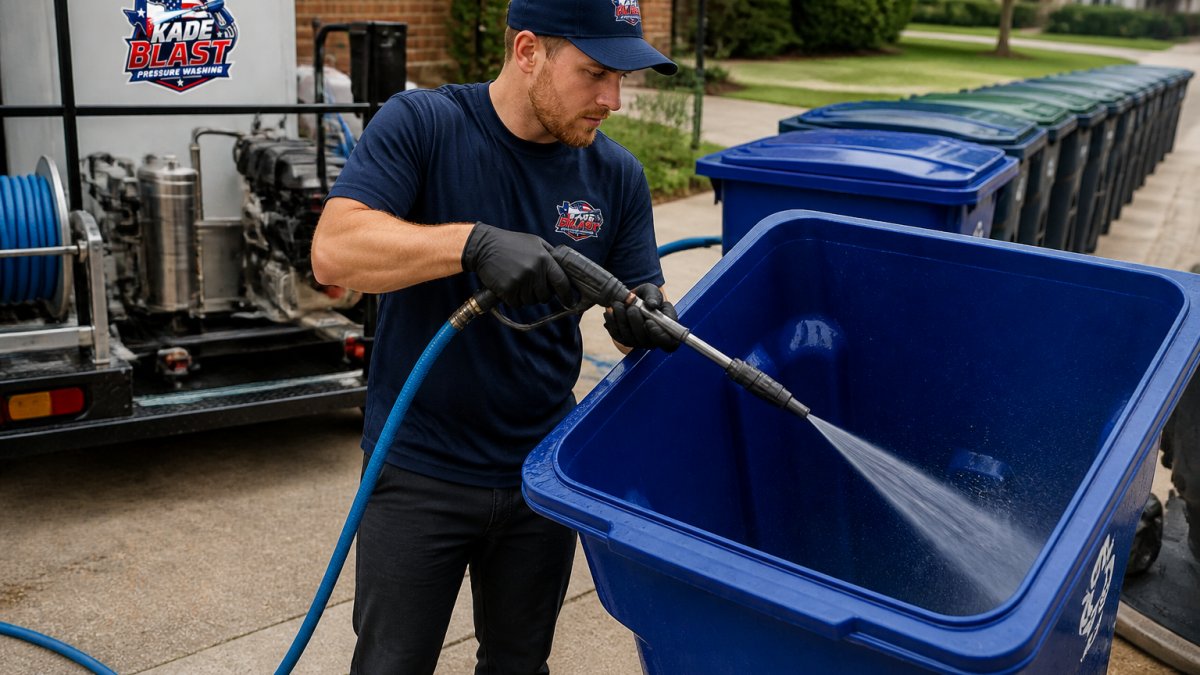
Last Updated: October 23, 2026
Quick Summary
Professional recycling bin cleaning uses commercial-grade hot water and sanitizing agents to remove grime, bacteria, and odors more effectively than DIY methods. It's worth considering if you live in a warm climate, generate significant food waste, value your time, or have tried DIY cleaning without lasting results.
- Professional service uses high-pressure hot water and sanitizing agents to kill bacteria and eliminate odors at the source, not just mask them.
- DIY pressure washer rental costs $40 to $80 plus supplies and 1 to 2 hours of your time per cleaning session.
- Most households benefit from cleaning recycling bins every 30 days, or every 2 to 3 weeks in hot, humid climates with food waste.
- Professional recycling bin cleaning makes sense if you have young children or pets who interact with bins or if DIY attempts have failed.
- Book a trial cleaning to see how long your bins stay fresh before committing to a monthly or quarterly service plan.
Table of Contents
- What Professional Recycling Bin Cleaning Actually Involves
- Professional Recycling Bin Cleaning Cost vs. DIY
- DIY Recycling Bin Cleaning: What You Need to Know
- How Often to Clean Recycling Bins for Best Results
- Real Benefits: Odor Removal, Bacteria Elimination, and Grime Buildup
- What to Look for in Trash Bin Cleaning Service Reviews
- Is Professional Recycling Bin Cleaning Worth It for Your Household?
- Frequently Asked Questions
What Professional Recycling Bin Cleaning Actually Involves
Professional recycling bin cleaning uses commercial-grade equipment to remove grime, bacteria, and odors. Unlike a garden-hose rinse, high-pressure washing reaches every corner.
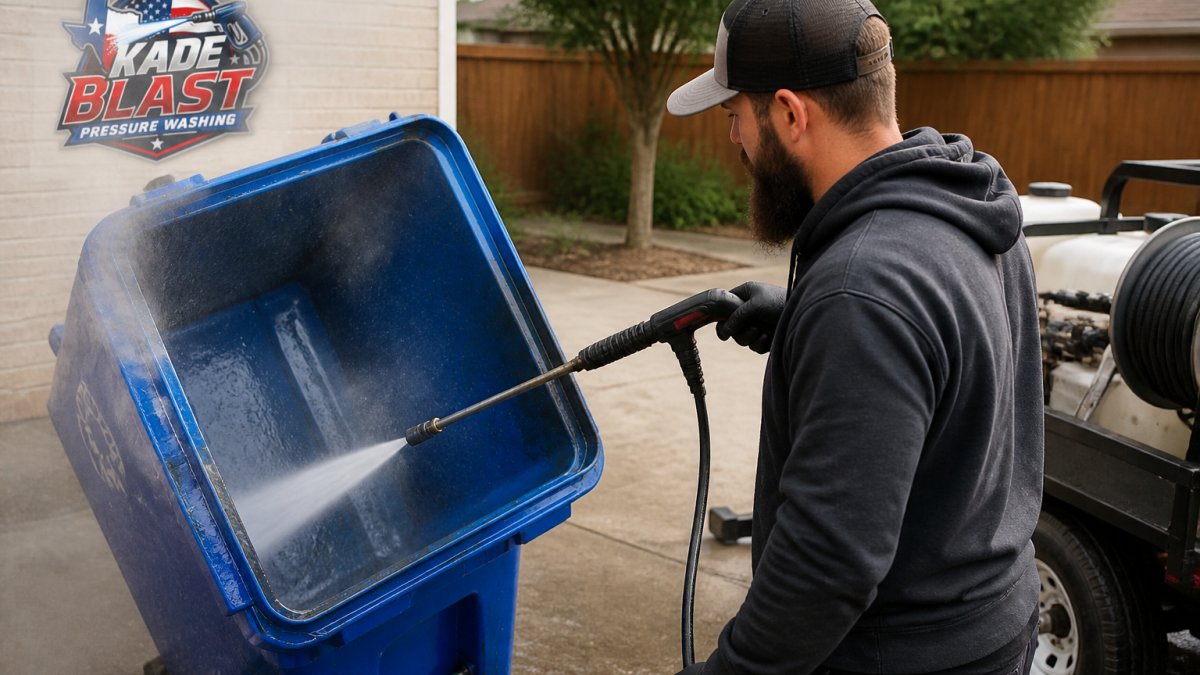
Here's what the process typically includes:
- High-pressure hot water spray that blasts away caked-on food residue, sticky labels, and buildup
- Sanitizing agents that kill bacteria and germs living inside the bin
- Deodorizing treatments that eliminate foul odors at the source, not just mask them
At Kade Blast Pressure Washing, we handle recycling bins with different compartments and materials.
The entire service happens without you being home. You schedule online in under 60 seconds, and the crew handles the rest, no mess on your driveway.
Professional Recycling Bin Cleaning Cost vs. DIY
A spray bottle from the hardware store runs $5 to $15, cheap until you factor in your Saturday morning, the water, and whether you'll actually get the bins clean.
If you want real results from DIY, you need:
- A pressure washer ($200 to $500 to buy, or $40 to $80 per day to rent)
- Specialized cleaning solution ($20 to $40)
- Protective gear (gloves, eye protection)
That's real money and effort. Professional recycling bin cleaning costs vary by bin quantity, frequency, and location, but you're paying for equipment you don't own, expertise you don't have, and results you can count on.
Here's the honest comparison:
| Approach | Equipment Cost | Time Per Cleaning | Results | Frequency |
|---|---|---|---|---|
| DIY spray bottle | $5-$15 | 30 minutes | Surface-level | Weekly (needed) |
| DIY pressure washer rental | $40-$80 | 1-2 hours | Good | Monthly |
| Professional service | Included | 0 minutes | Thorough | Monthly or quarterly |
The real question isn't the upfront cost. It's whether you'll actually do it, and whether it'll actually work. Most DIY attempts fail on both counts.
What Professional Service Actually Costs
Professional recycling bin cleaning is typically priced per bin, per visit.
Those ranges depend on:
- Number of bins (multi-bin discounts are common)
- Cleaning frequency (monthly plans cost less per visit than one-time)
- Local labor and water costs
The Break-Even Math for Your Household
To decide whether professional service is worth it, compare the all-in cost of DIY against the service fee based on your bin count, cleaning frequency, and what your time is worth.
DIY all-in cost per cleaning (pressure washer rental route):
- Pressure washer rental: $40 to $80
- Cleaning solution: $20 to $40
- Protective gear (amortized): $5 to $10
At $25 per hour for your time, a DIY pressure-washer cleaning costs roughly $90 to $180 in cash plus time.
DIY all-in cost if you own the equipment:
- Pressure washer purchase: $200 to $500 (amortized over several years)
- Cleaning solution: $20 to $40 per cleaning
- Your time: 1 to 2 hours per cleaning
If you own a pressure washer and clean four times a year, your cash cost per cleaning is $20 to $40 plus time, cheaper than professional service if your time has low opportunity cost and you're disciplined.
Break-even rule of thumb:
- One bin, cleaned monthly: professional service is often competitive with DIY once you count time and supplies.
- Two or more bins, cleaned quarterly: DIY with owned equipment can be cheaper in cash, but only if you actually do it.
- If you would otherwise rent a pressure washer each time, professional service is frequently the lower-cost option.
What You Are Really Paying For
When you hire a professional, you are buying:
- Commercial hot-water equipment that reaches temperatures a garden hose cannot
- Wastewater capture so dirty runoff does not flow into storm drains
- Trained operators who adjust pressure for plastic bins
The cheapest DIY approach is the one you actually complete. If you've tried and stopped, professional service isn't an indulgence, it's the only option that gets done.
At Kade Blast Pressure Washing, we price per bin and offer monthly and quarterly plans so you can compare the math directly. Book online in under a minute and see the results before committing to recurring service.
DIY Recycling Bin Cleaning: What You Need to Know
If you decide to clean your recycling bins yourself, here's what actually works.
Timing matters. Clean your bins on a day when you've got at least two hours and decent weather.
Essential supplies for DIY:
- Pressure washer (rented is fine) set to 1500 to 2000 PSI for bins
- Hot water if available (kills bacteria more effectively than cold)
- Degreaser or bin-specific cleaning solution
The actual process:
- Empty the bin completely and let it sit in the sun if possible (UV helps kill odors)
- Pre-rinse with cold water to loosen loose debris
- Apply cleaning solution and let it sit for 5 to 10 minutes
- Pressure wash at medium setting, starting from the top and working down
- Pay special attention to seams, corners, and the lid
- Rinse thoroughly until no soap residue remains
- Let air dry completely before putting it back in service
One critical mistake: pressure washing recycling bins at the same high PSI used on a driveway.
Recycling bins also have compartments and dividers that trap water and grime, so you need to access every section, longer than cleaning a standard trash can.
How Often to Clean Recycling Bins for Best Results
Frequency depends on your climate, what you put in the bin, and your tolerance for odor. In warm climates, bacteria multiply faster and odors develop stronger.
If your household generates a lot of wet waste (food packaging, damp cardboard), bump it up to every 2 to 3 weeks. If you're careful about what goes in the bin and live in a cooler climate, quarterly cleaning might be sufficient.
Here's the practical breakdown:
- Hot, humid climate with food waste: every 2 to 3 weeks
- Moderate climate, mixed waste: every 4 weeks
- Cooler climate, careful sorting: every 6 to 8 weeks
The smell is your signal. If your recycling bin smells bad by week 3, don't wait until week 4. Clean it.
Professional recycling bin cleaning services typically offer monthly or quarterly plans. Choose based on your actual needs, not a fixed schedule.
Real Benefits: Odor Removal, Bacteria Elimination, and Grime Buildup
Professional cleaning delivers three concrete benefits that DIY struggles to match, but be precise about what each means, because "clean," "sanitized," and "disinfected" are not interchangeable.
Odor removal is the most obvious benefit.
Bacteria reduction matters more than most people realize.
Grime buildup is the third benefit. Over time, sticky residue, food particles, and mold build up inside your bin. Pressure washing removes this layer completely.
Cleaning vs. Sanitizing vs. Disinfecting: What to Expect
These terms have specific meanings:
- Cleaning removes visible dirt, grime, and organic matter. It is the necessary first step.
- Sanitizing reduces bacteria on a surface to a level considered safe by public health standards.
- Disinfecting kills a higher percentage of bacteria and viruses, usually requiring a registered product and a specified contact time.
Most residential bin cleaning services clean and sanitize. True disinfection is less common because it requires a registered disinfectant, a pre-cleaned surface, and enough dwell time.
What Evidence to Look For
When evaluating sanitation claims, ask:
- What cleaning and sanitizing products are used, and are they used according to label directions?
- Is there a stated contact time for the sanitizer?
- Does the provider capture and dispose of wastewater properly?
A credible provider will answer these questions plainly. A provider who cannot explain their method is asking you to take the claim on faith.
The Compounding Effect
These benefits compound: a genuinely clean bin smells better, stays cleaner longer, and is less attractive to pests. But keep expectations realistic. Professional cleaning removes the grime and odor source, meaningfully reduces bacteria, and gives you a repeatable schedule, it doesn't make your bin permanently self-cleaning or replace good habits like rinsing containers and keeping food waste out of the recycling stream.
At Kade Blast Pressure Washing, we explain our cleaning and sanitizing process up front and provide before-and-after photos so you can judge the results yourself.
What to Look for in Trash Bin Cleaning Service Reviews
Check for consistency. Read multiple reviews. One great experience alongside three mentions of inconsistent results is a red flag.
Ask about equipment and methods. A credible provider explains hot water temperature, pressure settings, and sanitizing agents.
Verify they handle recycling bins specifically. Recycling bins have different materials and compartment designs than trash cans; a specialist understands these nuances.
At Kade Blast Pressure Washing, we provide before-and-after photos so you can see the actual results.
Is Professional Recycling Bin Cleaning Worth It for Your Household?
The answer depends on your situation.
Professional recycling bin cleaning makes sense if:
- You live in a warm climate where odors develop quickly
- Your household generates significant food waste or wet packaging
- You have young children or pets who interact with the bins
DIY or less frequent cleaning makes sense if:
- You live in a cooler climate with slower bacterial growth
- You're meticulous about what goes in the recycling bin
- You have the time and willingness to clean regularly
- You own a pressure washer or are comfortable renting one
This isn't about whether professional recycling bin cleaning is "worth it" in the abstract, it's about whether it's worth it for you.
Consider a trial: book one professional cleaning and see how long your bins stay fresh.
At Kade Blast Pressure Washing, we make it simple to try. Book online in under a minute, see the results, and decide if recurring service makes sense for your household.
Professional recycling bin cleaning removes the guesswork from bin maintenance.
Frequently Asked Questions
Is professional recycling bin cleaning worth the cost?
Whether professional recycling bin cleaning is worth it depends on your time availability, bin condition, and odor problems. If Texas heat creates persistent foul smells, bacteria buildup attracts pests, or you lack time for DIY cleaning, professional service saves time and delivers sanitized results. Busy families in suburban areas often find the convenience justifies the cost. Compare the time you'd spend cleaning (plus equipment purchase) against service pricing on the provider's website to determine your break-even point.
How often should recycling bins be professionally cleaned?
Most households benefit from professional recycling bin cleaning every 3-6 months, depending on usage, climate, and odor levels. In hot climates where bacteria multiply quickly, monthly or quarterly service may be necessary. Some providers offer flexible recurring plans, allowing you to adjust frequency based on your needs. One-time cleaning works if your bins have accumulated heavy grime, but ongoing maintenance prevents odor and bacterial issues from returning.
Can I clean a recycling bin myself instead of hiring a professional?
You can clean recycling bins yourself using a garden hose, brush, and household cleaner, but this approach takes significant time and effort. DIY cleaning rarely removes caked-on food residue effectively. Professional services use commercial-grade high-pressure equipment, specialized sanitizing agents, and eco-friendly deodorizers that deliver superior results. If you have limited time, physical limitations, or bins in tight spaces behind your garage, professional cleaning is more practical and thorough.
What should I look for in a trash bin cleaning service?
When evaluating trash bin cleaning services, check for commercial-grade equipment, certified sanitizing agents, eco-friendly deodorizers safe for pets and families, online booking convenience, and customer reviews mentioning odor elimination and grime removal. Ask about their process for handling bins in difficult-to-access areas, guarantees on sanitation results, and whether you need to be home during service. Verify they use contained, mess-free cleaning methods and offer satisfaction guarantees or before-and-after documentation of results.
